






SINGAPORE – Homemaker Rosnah Sulaiman struggled to cope after the death of her husband in 2017.
But in 2023, the 77-year-old woman got a ‘micro-job’ after a manager at Thye Hua Kwan Active Ageing Centre (AAC) @ Bedok suggested it to help her after her loss.
She delivers meals to frail seniors in her block three times a week for lunch and dinner, and is paid a small allowance of $1 per meal delivered.
“I find it a very good way to cheer myself up, to get rid of my depression and loneliness. I got to know a lot of people,” said Madam Rosnah, who does not have children.
She is among 700 seniors across 18 AACs who have participated in a micro-jobs programme by Thye Hua Kwan Moral Charities (THKMC) over the last two-and-a-half years.
Building on the programme, an expanded micro-jobs initiative was launched on Oct 13, with a $1.47 million donation from DBS Foundation.
The donation will go in part toward the development of a new app by THKMC and DBS Foundation to enable seniors to easily find, apply for and receive payment for micro-jobs. The app is expected to be ready in the first half of 2026 for seniors in Singapore.
The micro-jobs initiative will be rolled out to 100 AACs over four years, benefitting 5,000 seniors.
The partnership aims to help more seniors to take on flexible, task-based work opportunities, allowing them to contribute to society and enhance social connections.
To expand the supply and diversity of micro-job tasks, THKMC and DBS Foundation will also rally their networks across the private, public and people sectors to provide micro-jobs.
Beyond typical tasks such as accompanying seniors to their medical appointments, they hope to offer more skills-based tasks like leading community programmes, mentoring others and providing operational support at retail businesses.
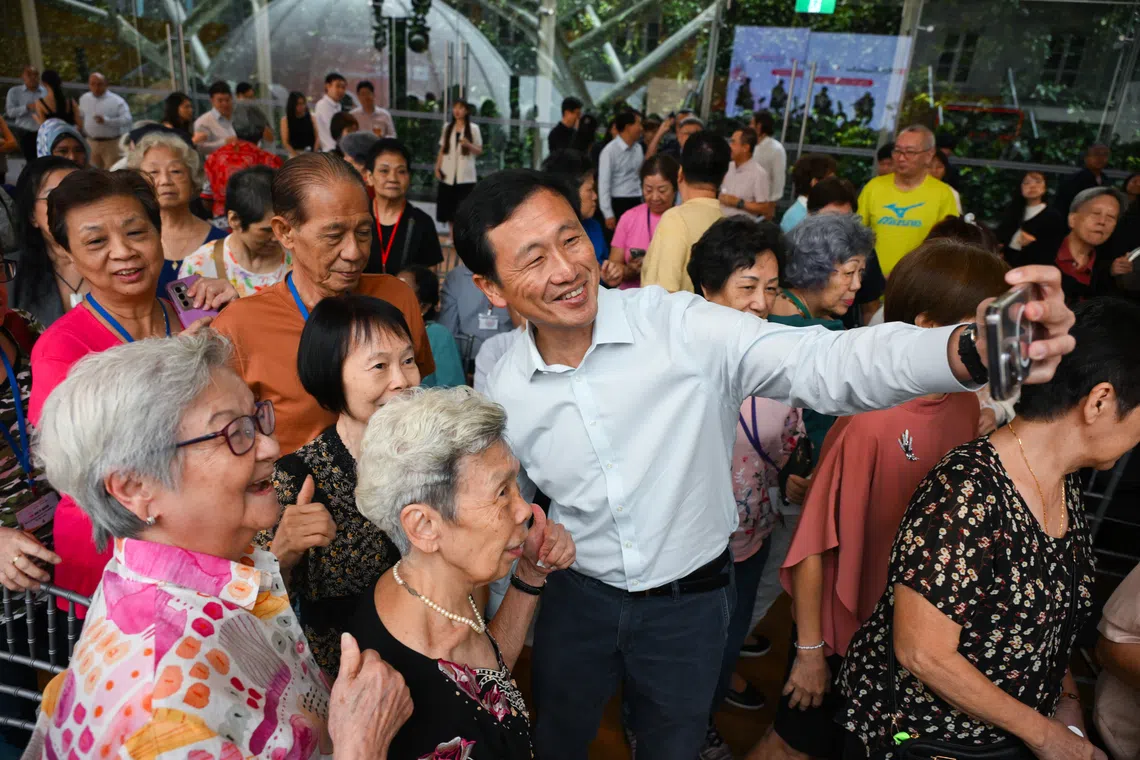
Speaking at the launch event at National Gallery Singapore, Minister for Health Ong Ye Kung said the micro-jobs programme helps seniors restore a sense of purpose after retiring.
He said he had brought up the idea of a super-aged society – when one in five people here will be aged 65 and above in 2026 – in Parliament to wake people up to this reality.
“But having woken up to this reality that 2026 will be super-aged, I think we should also maybe stop talking about it, because we keep telling ourselves we are old,” he said.
“The only way for us to not feel so old is to say 65 is young,” he added.
Mr Ong, who is also Coordinating Minister for Social Policies, said Singapore can learn from countries with ageing populations, such as Japan, which became a super-aged society 20 years before Singapore.
He said he had modelled Singapore’s AACs after Ibasho houses in Japan’s villages, centres where seniors gather and take care of each other.
“Fundamentally, (ageing) is no longer just a hospital issue…. but it’s a communal, community issue.”
Mr Ong said “Ibasho” means “place to be”, a space where one feels a sense of belonging.
“What we want is for seniors to continue to have that sense of belonging, sense of purpose,” he said.
Another senior who took up the opportunity to do micro-jobs is Madam Kong Mei Lin, 71, who leads weekly chair Zumba exercises and assists in fun dance classes for seniors at Thye Hua Kwan AAC @ Kaki Bukit.
Visiting the centre four times a week, the retired administrative worker also helps out with other tasks, from packing goodie bags to playing rummy-o with frail seniors.
“Whatever I can help with, I will help,” said Madam Kong, who added that she has more time on her hands as she is single.
“I feel good that I can contribute to the sense of satisfaction and life fulfillment of people. I’m happy doing it.”
She said it is especially rewarding when withdrawn seniors open up to her.
Madam Kong is paid $4 per Zumba or dance class, but the small allowance matters little to her.
It is the bonds that count – the seniors check in on one another and share about their daily lives and problems. “We know each other like friends,” said Madam Kong.
Read more on The Straits Times

