






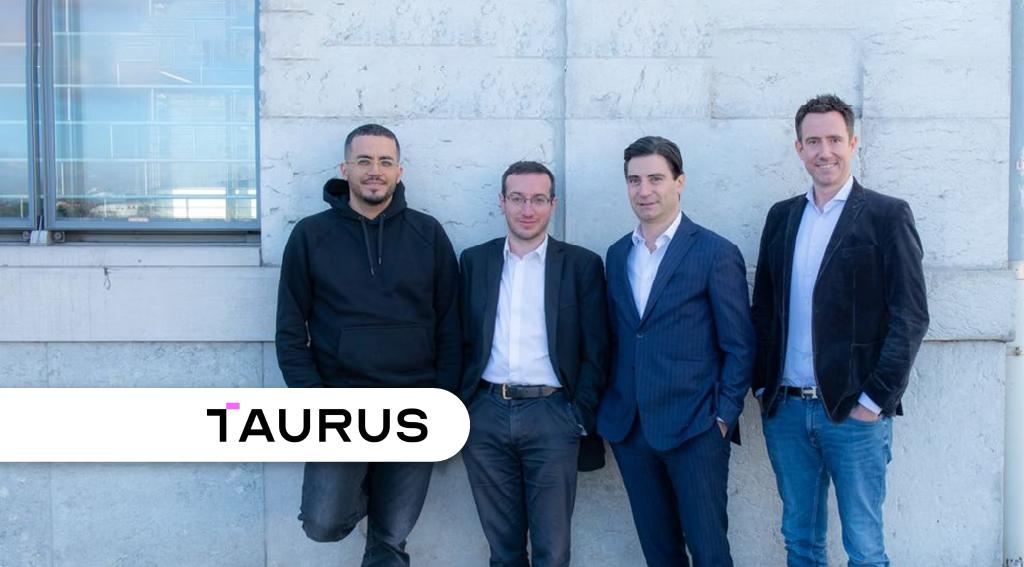

Taurus SA has deployed the first private stablecoin contract, introducing a model that combines transaction confidentiality with regulatory access. Built on Aztec Network’s zero-knowledge Layer 2, the contract marks a step forward in making stablecoins viable for real-world use cases such as payroll, intra-company transfers, and treasury applications.
JP Aumasson, Chief Security Officer at Taurus, commented, “This marks a major step forward for stablecoins. We showed that it’s possible to protect the privacy and security of stablecoin users while retaining the features of industry-standard stablecoins. This addresses concerns that we’ve repeatedly heard from banks looking at issuing stablecoins, central banks, and regulators.”
The deployment expands Taurus’s work in digital asset privacy, following its Q1 2025 release of the first open-source private security token. Together, these innovations enable confidentiality on both the cash and securities legs of blockchain-based financial transactions.
The Taurus stablecoin contract supports all key compliance features of mainstream stablecoins such as USDC, including centralized minting and burning, the ability to pause transactions, address blacklisting, and verifiable audit trails. What distinguishes it is the use of encryption to shield all balances and transactions from public view. Only authorized entities — such as issuers, regulators, and law enforcement — can decrypt and view this information, allowing regulatory observability without exposing user activity to the broader public.
Arnaud Schenk, Executive Director of the Aztec Network board, commented, “Enforced global transparency of public blockchains limits the real-world adoption of stablecoins. Practical adoption for payroll, intra-company transfers, or day-to-day payments simply can’t happen if every transaction remains visible to all and immutably inscribed on a widely available ledger. Aztec’s zero knowledge Layer 2 is the only platform that delivers both airtight privacy for users, and granular issuer defined controls baked directly into the token.”
The announcement comes shortly after the U.S. Senate passed the GENIUSAct, which establishes a legal framework for stablecoin issuance and oversight. That development has reenergized stablecoin initiatives globally, with Taurus positioning its privacy-preserving solution as timely and aligned with emerging compliance requirements.
The company estimates that total stablecoin supply could grow to $1 to $2 trillion by 2030, up from just over $250 billion today. This projection reflects increasing demand across both institutional and retail markets, particularly in jurisdictions where digital payment systems are expanding under new legal safeguards.
Unlike legacy stablecoins that leave all transactions visible on public blockchains, the Taurus model prevents third parties from monitoring wallet activity, tracing fund flows, or identifying high-value users — concerns that have made banks and corporates hesitant to adopt on-chain settlement systems.
The smart contract infrastructure delivers encrypted transfers and balance visibility, while retaining emergency intervention capabilities. This makes it suitable for deployment in high-security contexts where privacy is essential, such as B2B payments, internal liquidity management, and tokenized financial instruments.
The Taurus announcement places it at the intersection of financial regulation and blockchain innovation. As stablecoins continue evolving from public, transparent tokens to infrastructure-grade digital cash instruments, Taurus’s model may help bring new issuers — including regulated financial institutions — into the space.

