






The Tidö 2.0 report by the Timbro and Oikos think tanks lists 132 proposals for reforms the government could carry out if they win a second parliamentary term in next September’s election.
Among them is a new “democracy inquiry” in which a parliamentary committee would look at issues such as whether the number of MPs in parliament should be reduced, whether local and national elections should still be held at the same time, what benefits and perks MPs should have, and the voting rights of non-citizens.
The committee, it said would look at “whether the right to vote for non-citizens in municipal and regional elections should remain and, if so, under what conditions”.
The idea has long been supported by the Sweden Democrats, with Sweden Democrat MP Pontus Andersson Garpvall in 2023 calling in parliament for non-citizens to lose their right to vote in local elections.
“A person who immigrated to Sweden this summer but who may never work or even learn the language has a voting right at the next election that is worth just as much as that of a Swedish citizen,” Garpvall told parliament. “In my opinion, this is not only unfair. It also poses risks.”
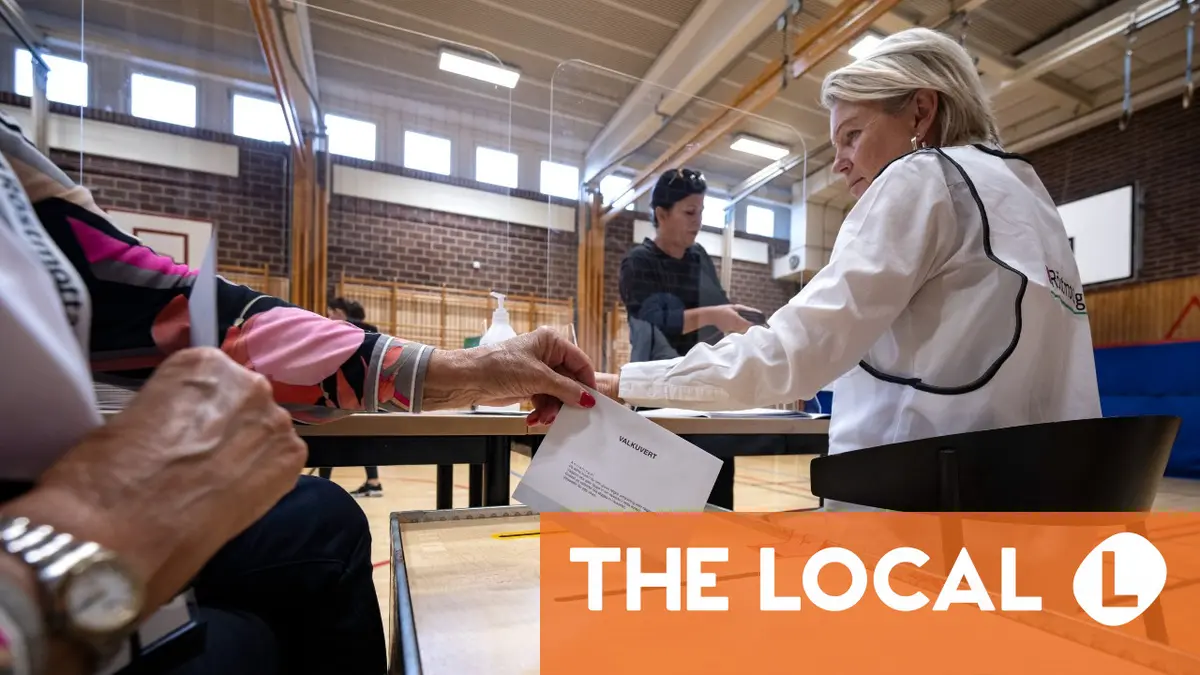
Non-EU citizens are able to vote in local and regional elections in Sweden if they have been resident in the municipality or region for at least three years. EU citizens would retain this right even if Sweden changed the rules, as it is granted to them under EU law.
Sweden’s Justice Minister Gunnar Strömmer said in answer to Garpvall’s question in 2023 that there had long been “broad parliamentary consensus” on non-citizens’ right to vote in municipal and regional elections, and the right was also backed up by EU legislation, adding that he had “no intention to take any initiatives in this area”.
But support for the idea of revisiting the issue is also growing within the Moderates, with Hampus Magnusson, leader of the Moderate Party in Gothenburg municipality, making a similar call in 2024.
The Tidö 2.0 report is co-authored by Arvid Hallén, who co-founded the Oikos think tank linked to the Sweden Democrats, and Adam Danieli, a Moderate Party politician in the Stockholm regional government who is responsible for issues concerning rule of law at the Timbro think tank.
Losing the right to vote is not the only change proposed by the two think tanks that directly targets foreigners living in Sweden.
The document proposes making it possible to deport foreigners who are suspected of carrying out serious crimes even if they are not found guilty by a court, and it proposes an end to Sweden’s acceptance of UN quota refugees.
It also proposes offering foreigners who commit less serious crimes the option of voluntary deportation in exchange for shorter prison sentences.

