






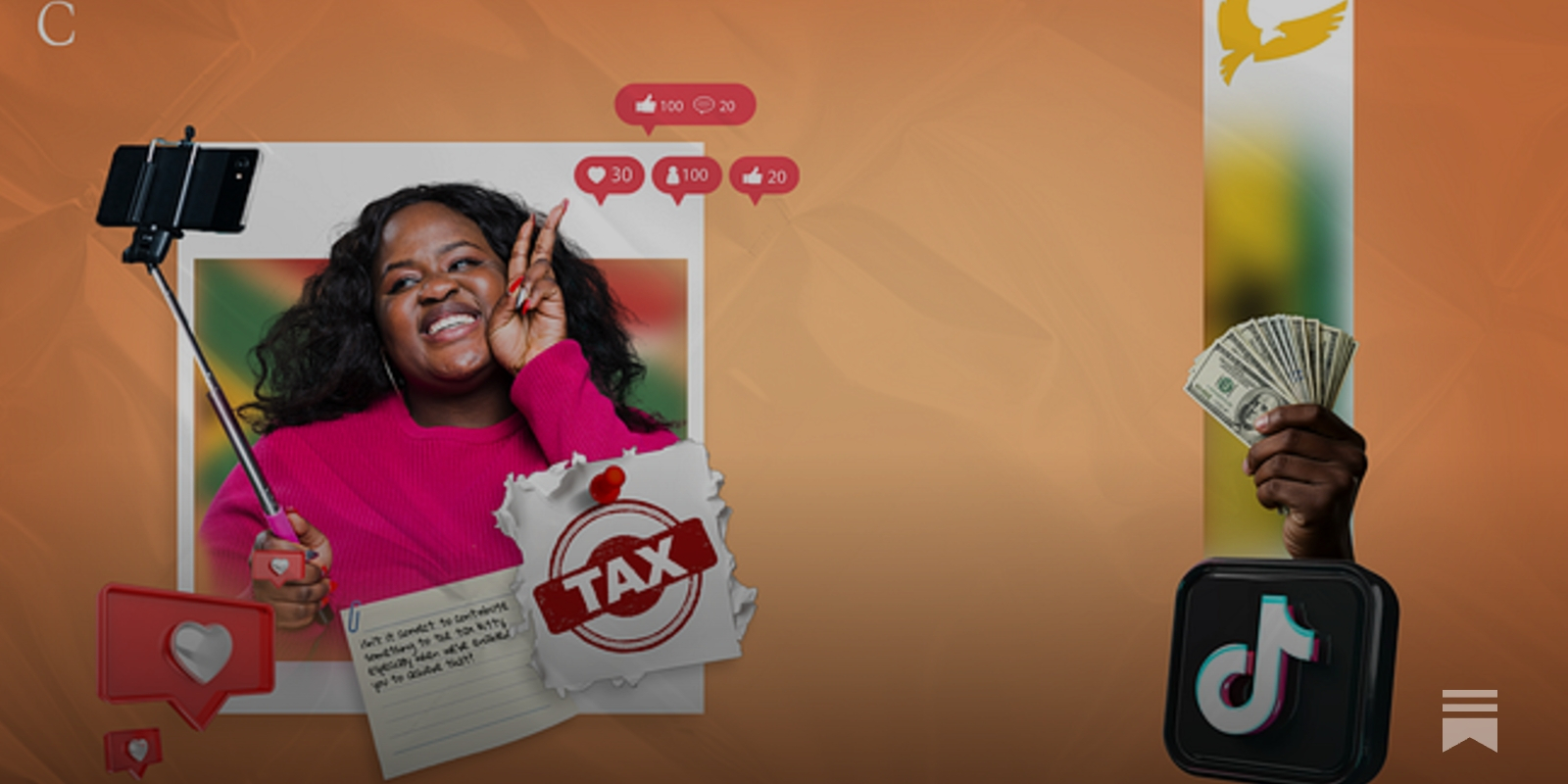
South Africa’s revenue agency wants influencers to pay taxes; Ghana Commercial Bank wants to be TikTok’s official local payment partner
Monetisation has always been the biggest headache for African creators. Both local and global platforms still lack the structures to pay them, leaving many working hard but earning little or nothing. As today’s Digest shows, government policies can either ease these struggles or make them worse.
A quick note: If you value the insights you get from Communiqué, please consider supporting us by donating here.
In today’s digest, we discuss
The South African Revenue Service (SARS) has included social media influencers in the tax bracket. Under the country’s Income Tax Act, all income earned by influencers — whether from products, services, travel, or grants — must be declared
In August, SARS urged influencers to regularise their tax affairs, describing them as “entrepreneurs” who leverage their social followings for income. In a follow-up statement on September 6, the agency reiterated its stance, stressing that it will first help influencers understand how to comply before applying penalties. Commissioner Edward Kieswetter emphasised that while SARS aims to provide clarity, influencers must also “uphold their end of the bargain.”
The development mirrors Kenya, where recent amendments introduced new taxes on creators earning through YouTube, TikTok, and Instagram. The move has drawn criticism for applying an Excise Duty Tax, traditionally designed to curb harmful consumption, to the digital economy. Creators and analysts argue that such taxes ignore the unique nature of online work and could stifle a fast-growing sector that provides income for young people.
Beyond Africa, governments are taking similar steps. The trade-off for public investment in e-commerce infrastructure and digital policies is that tax obligations follow. With rising fiscal pressures, authorities worldwide, including in the U.S., are expanding revenue bases to capture earnings in the creator economy. Kenya’s President William Ruto defended the approach in December 2024: “Some creators now earn up to Ksh 1 million. Someone earning Ksh 20,000 or 30,000 pays tax. If you earn Ksh 1 million, isn’t it correct to contribute something to the tax kitty, especially when we’ve enabled you to achieve that? I think that makes sense.”
Ghana Commercial Bank (GCB) is lobbying to become the designated payment gateway for the country’s TikTok creators. On Monday, bank officials reportedly met with Communications Minister Samuel Nartey George to pitch a framework that would allow creators to receive TikTok earnings directly through local banking channels.
The bank argued that its partnerships with Mastercard and Visa position it well to manage payouts. TikTok has said it will examine the feasibility of the proposal.
The move highlights a long-standing challenge: TikTok relies on processors like Stripe, which is unavailable in most African countries, weakening the continent’s position in the digital economy. GCB’s push is notable because it seeks to fill this gap.
But payments are only part of the problem. The TikTok Creator Fund, which pays eligible creators, is unavailable in Africa. The TikTok Creator Marketplace, which connects brands with influencers, is also limited. Currently, only Morocco, Egypt, and South Africa access some form of payout scheme through the TikTok Effect Creator Rewards program, which operates in just 53 regions worldwide.
Even if GCB succeeds, few Ghanaian creators would qualify for payouts. About 52,021 creators in Ghana meet the 10,000-follower threshold for the Creator Fund, while only 4,676 accounts surpass the 100,000 followers required for the Marketplace. By contrast, Nigeria counts 203,485 creators with over 10,000 followers and 16,287 with over 100,000.
Globally, TikTok has not announced any official partnerships with traditional banks like GCB. Still, solving the payments bottleneck could be a crucial step toward unlocking wider monetization for African creators and sparking more local interest in TikTok. For now, all eyes are on how the platform responds.
The ambitious community cinema project gives us a glimpse of another dimension of the trade-offs between content protection and user experience. This week’s Communiqué essay digs into what went right, what went wrong, and the lessons for Nigeria’s film distribution future.
Read more on readcommunique.com

