






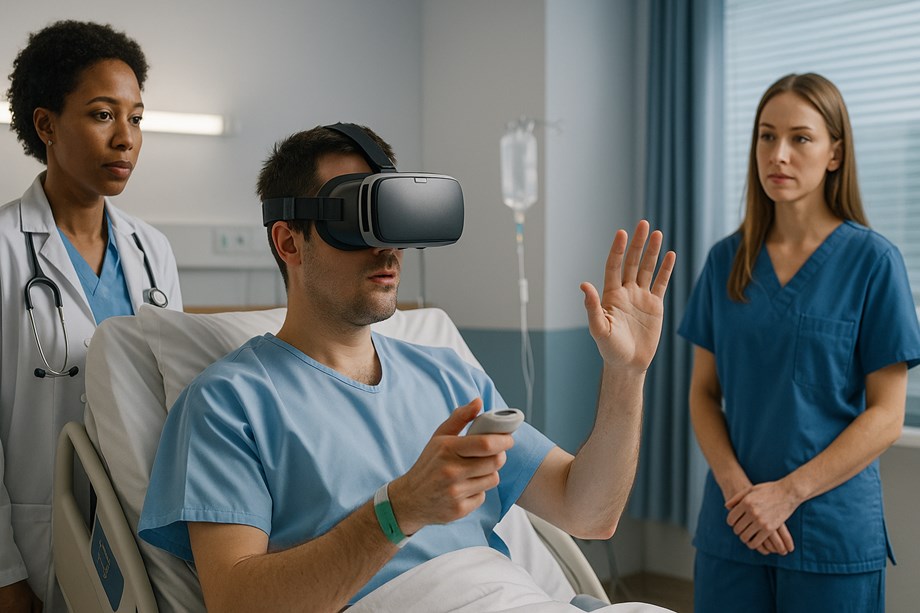
The paper argues that combining blockchain’s secure data management with the metaverse’s immersive environments can transform healthcare into a more patient-centric, transparent, and interactive system. It highlights vast opportunities for virtual consultations, digital twins, and smart contracts while warning of challenges in privacy, scalability, ethics, and accessibility.
Research authored by Suhail Rashid Wani and Roshni Afshan of the Noida Institute of Engineering and Technology proposes a transformative vision for modern healthcare. The researchers argue that the integration of immersive metaverse technologies with the security of blockchain can reinvent patient care, making it more interactive, secure, and tailored to individual needs. Instead of being limited to clinical visits or video calls, patients might soon attend consultations in virtual hospitals, train with doctors in simulated settings, or undergo therapy in digital spaces. At the same time, blockchain would ensure that every medical record, transaction, and consent form is stored transparently and securely, shielding sensitive health data from tampering or unauthorized access.
The metaverse, once imagined primarily for entertainment, is steadily gaining ground in medicine. Its immersive environments allow doctors to rehearse surgeries using digital twins of patient anatomy, reducing risks during actual procedures. Patients suffering from chronic illnesses can participate in virtual rehabilitation programs from their own homes, guided by avatars of healthcare professionals. Mental health interventions using VR are already showing promising results in reducing anxiety and managing pain. During the COVID-19 pandemic, telemedicine expanded rapidly, and the authors highlight that metaverse platforms are a natural evolution of that shift. Instead of flat video calls, patients and physicians could meet in life-like digital clinics where communication is richer and engagement deeper, potentially improving compliance and treatment outcomes.
Running alongside this evolution is blockchain, a decentralized ledger that the authors call the “guardian of medical data.” Traditional hospital databases are often fragmented, prone to breaches, and unable to seamlessly share information across institutions. Blockchain offers encryption, immutability, and transparency, allowing records to be both secure and interoperable. Each transaction, whether it is a patient record update, a diagnostic report, or an insurance claim, is permanently linked to previous ones, making unauthorized alterations nearly impossible. Beyond storage, blockchain introduces smart contracts, which automatically enforce agreements without intermediaries. In healthcare, these can streamline insurance billing, automate patient consent, and reduce fraud. Initiatives like MIT’s MedRec and BurstIQ’s data exchange platforms demonstrate that blockchain-powered healthcare systems are already feasible, providing decentralized yet trustworthy access to sensitive information.
The real innovation, the paper emphasizes, lies in combining blockchain’s security with the metaverse’s immersive experience to create a patient-centered model. Patients would control access to their health information, while at the same time engaging with doctors and therapies in more interactive ways. Researchers and clinicians would benefit from comprehensive, real-time datasets stored securely on blockchain, enabling breakthroughs in diagnostics and global collaboration. Still, several hurdles persist. Privacy remains a central issue, as blockchain’s transparency can inadvertently expose sensitive details. Scalability is another challenge: most legacy blockchains handle fewer than 30 transactions per second, far below the requirements of a healthcare metaverse hosting millions of interactions. Solutions such as Layer-2 scaling, sidechains, and zero-knowledge proofs show promise but are not yet perfect.
Ethical concerns are equally pressing. Will all patients have access, regardless of financial resources or digital literacy? Could such technologies widen the healthcare gap instead of closing it? Legal frameworks like HIPAA in the United States and GDPR in Europe must be harmonized with blockchain standards to ensure compliance. The authors insist that success will require not just technologists, but ethicists, policymakers, healthcare workers, and patients to work together to establish guidelines and fair practices.
Despite these challenges, the authors remain optimistic. They envision a future where virtual hospitals complement physical ones, blockchain underpins trust in digital systems, and smart contracts eliminate inefficiencies in administration. The potential benefits are too great to overlook: secure and tamper-proof storage of health records, fraud-resistant insurance processes, immersive training platforms for doctors, better adherence to therapies by patients, and a more humane and personalized approach to medicine. The paper concludes that interdisciplinary cooperation is key. Only through collaboration between clinical experts, technology developers, regulators, and ethicists can these dual technologies be harnessed responsibly.
In the end, Wani and Afshan offer not just a technological blueprint but a societal challenge: to build a healthcare system that is secure, inclusive, and truly patient-centered. By combining immersive digital interaction with uncompromising data integrity, blockchain and the metaverse could transform medicine into a field where innovation serves humanity’s deepest needs. If implemented thoughtfully, this dual-tech approach promises not just incremental improvement but a paradigm shift in how healthcare is delivered and experienced worldwide.

