






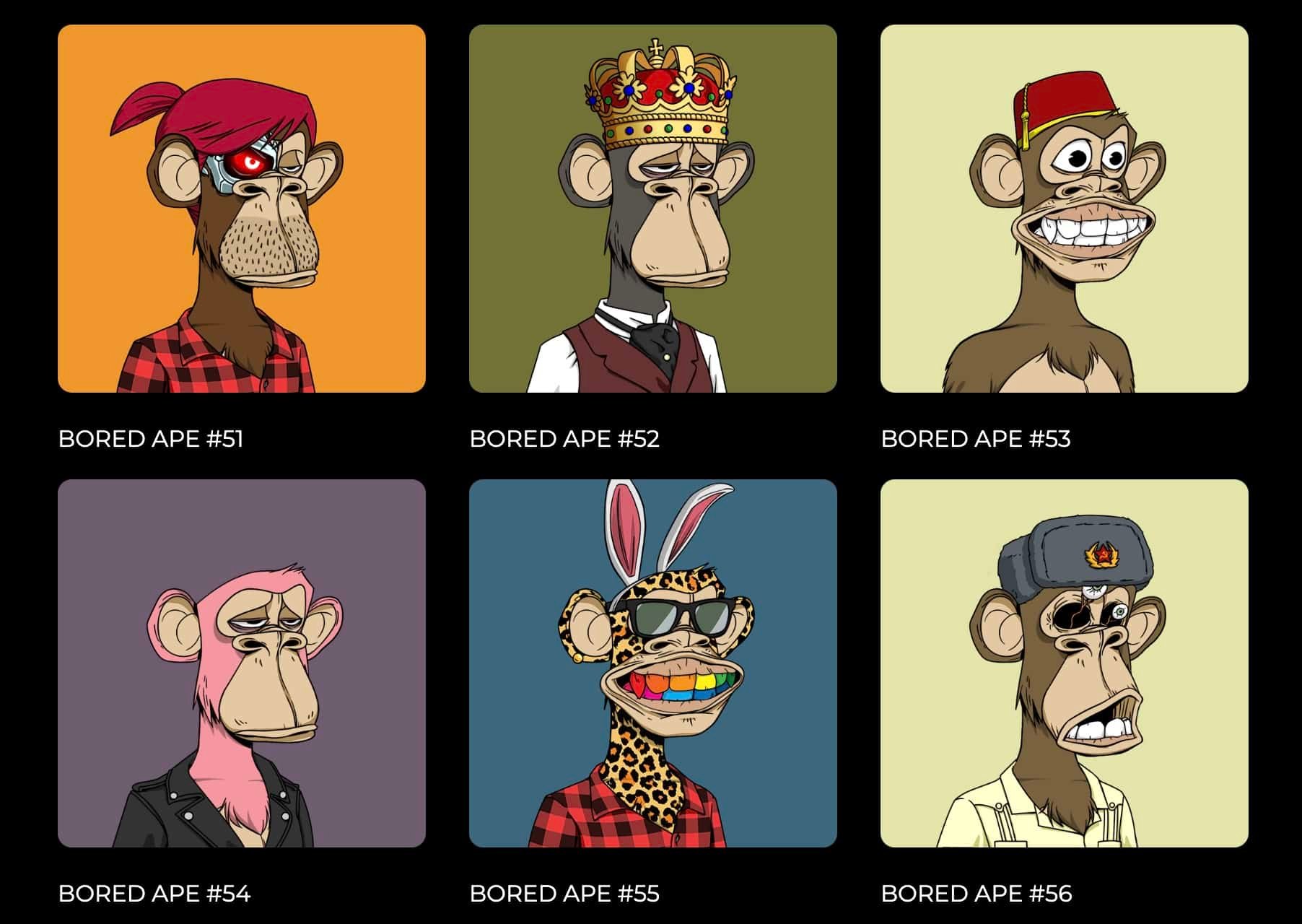
The appellate panel sent the case back to a lower court to have a jury decide whether consumers were likely to be confused by protest versions of Bored Apes NFTs.
PASADENA, Calif. (CN) — The Ninth Circuit Court of Appeals said on Wednesday that a trial judge was too quick to conclude that purported protest knockoffs of the Bored Ape Yacht Club nonfungible tokens infringe the trademarks of Yuga Labs, the company that created and sold the original cartoons.
In a unanimous opinion, the three-judge panel reversed a Los Angeles federal judge who two years ago had granted Yuga Labs summary judgment on its trademark infringement and cybersquatting claims against conceptual artist Ryder Ripps and his collaborator Jeremy Cahen.
“Grappling with this nascent technology, we hold that Yuga’s NFTs are not merely monkey business and can be trademarked,” U.S. Circuit Judge Danielle Forrest, a Donald Trump appointee, wrote in the 64-page opinion. “Nonetheless, we reverse the district court’s grant of summary judgment for Yuga on its trademark-infringement and cybersquatting claims because it has not proven as a matter of law that defendants’ actions are likely to cause consumer confusion.”
The Bored Ape collection was one of the most successful NFTs collections and was endorsed by a slew of celebrities, including Justin Bieber, Paris Hilton, Madonna and Jimmy Fallon. Nonfungible tokens shot to popularity on the back of cryptocurrencies by using a similar blockchain technology to create a unique digital file for an image that can be held as an investment or sold on secondary marketplaces.
Yuga Labs sold the entire 10,000 images of the Bored Ape Yacht Club on the first day they became available in 2021, and the NFTs have been resold for hundreds of thousands — and sometimes millions — of dollars.
The success of the collection also drew criticism, including by Ripps and Cahen, who claim that the images include racist, neo-Nazi and alt-right dog whistles.
“This whole process began as a protest against racism, antisemitism and financial fraud,” Cahen testified at a July 31, 2023 bench trial. “We didn’t intent to confuse anyone.”
Yuga Labs sued the two makers of the so-called Ryder Ripps Bored Ape Yacht Club nonfungible tokens, which they started selling in 2022, claiming that they used the very same trademarks that Yuga Labs uses to promote and sell authentic Bored Ape Yacht Club NFTs and that they intentionally sought to cause financial harm to Yuga Labs and to the holders of authentic Bored Ape Yacht Club NFTs.
In April 2023, U.S. District Judge John Walter “easily” concluded on summary judgment — where a judge looks at the undisputed evidence to decide a claim as a matter of law — that it was likely that buyers of NFTs would be confused by Ripps and Cahen’s protest Bored Apes and, therefore, that their creations infringed Yuga Labs’ trademarks.
“Confusion is likely given the complexity and required sophistication to understand the blockchain and verify provenance,” Walter said. “Indeed, defendants concede that authenticating NFTs requires specialized knowledge and, because of the specialized knowledge required, defendants knew that their Ryder Ripps Bored Ape Yacht Club NFTs were likely to be confused with Yuga’s Bored Ape Yacht Club NFTs.”
The Ninth Circuit panel, however, said that the question of consumer confusion is “an inherently fact-specific inquiry,” which in some cases can be decided on summary judgement, but not in this case.
For one, the panel said, it wasn’t clearcut that the defendants’ “marks” — the combination of words, symbols and design they use to market their NFTs — were confusingly similar to those of Yuga Labs.
While both use Bored Ape Yacht Club and the acronym BAYC, Ryder Ripps’ NFTs were sold as RR/BAYCs, the panel noted. As such, a reasonable juror, according to the panel, may conclude that the marks aren’t similar.
Moreover, the panel said, there was conflicting evidence as to whether consumers were actually confused regarding the Ryder Ripps Bored Apes’ provenance.
Yuga provided consumer-survey evidence and examples of NFT market actors and television hosts confusing the two brands to support its claim. But other evidence, the panel said, suggested that those interested in the NFTs knew that BAYC and RR/BAYC were different.
“Considering the fully online nature of the NFT collections and how atomized and widely scattered internet users are, a reasonable juror might conclude that Yuga’s evidence of actual confusion is unpersuasive as to the ultimate issue of
likelihood of confusion,” Forrest wrote.
In addition, a reasonable and prudent buyer of NFTs would be aware that Yuga Labs collection of Bored Ape NFTs would only be available on the secondary market for steep prices — as high as $24.4 million, the panel said. Ryder Ripps’ Bored Apes were for sale for just $100 or $200.
“This extreme price differential would likely alert a consumer that there may be a substantive difference between the two NFT collections, undercutting the likelihood of confusion,” Forrest wrote. “Indeed, there is evidence in the record that this occurred.”
The appellate panel also included U.S. Circuit Judge Bridget Bade, a Donald Trump appointee, and U.S. District Judge Gonzalo Curiel of the Southern District of California, a Barack Obama appointee who sat on the panel by designation.
They sent the case back to Walter to have a jury decide at trial whether consumers were likely to be confused by the protest Bored Apes.
“Mr. Ripps and Mr. Cahen are very pleased with this significant win,” Louis Tompros, their attorney, said in an email. “The Ninth Circuit recognized the fundamental flaw in Yuga’s trademark case: there was no confusion. Nobody was ever likely to be confused into thinking that the RR/BAYC Project satirical NFTs came from Yuga, and the websites that Mr. Ripps and Mr. Cahen registered were not ‘confusingly similar’ to anything of Yuga’s.”
Attorneys for Yuga Labs didn’t immediately respond to a request for comment on the decision.
Read more on Court House News Service

