










Schoolchildren attending supplementary classes at Good Work Foundation’s digital learning campuses learn how to make and code Lego Spike robots using technology.
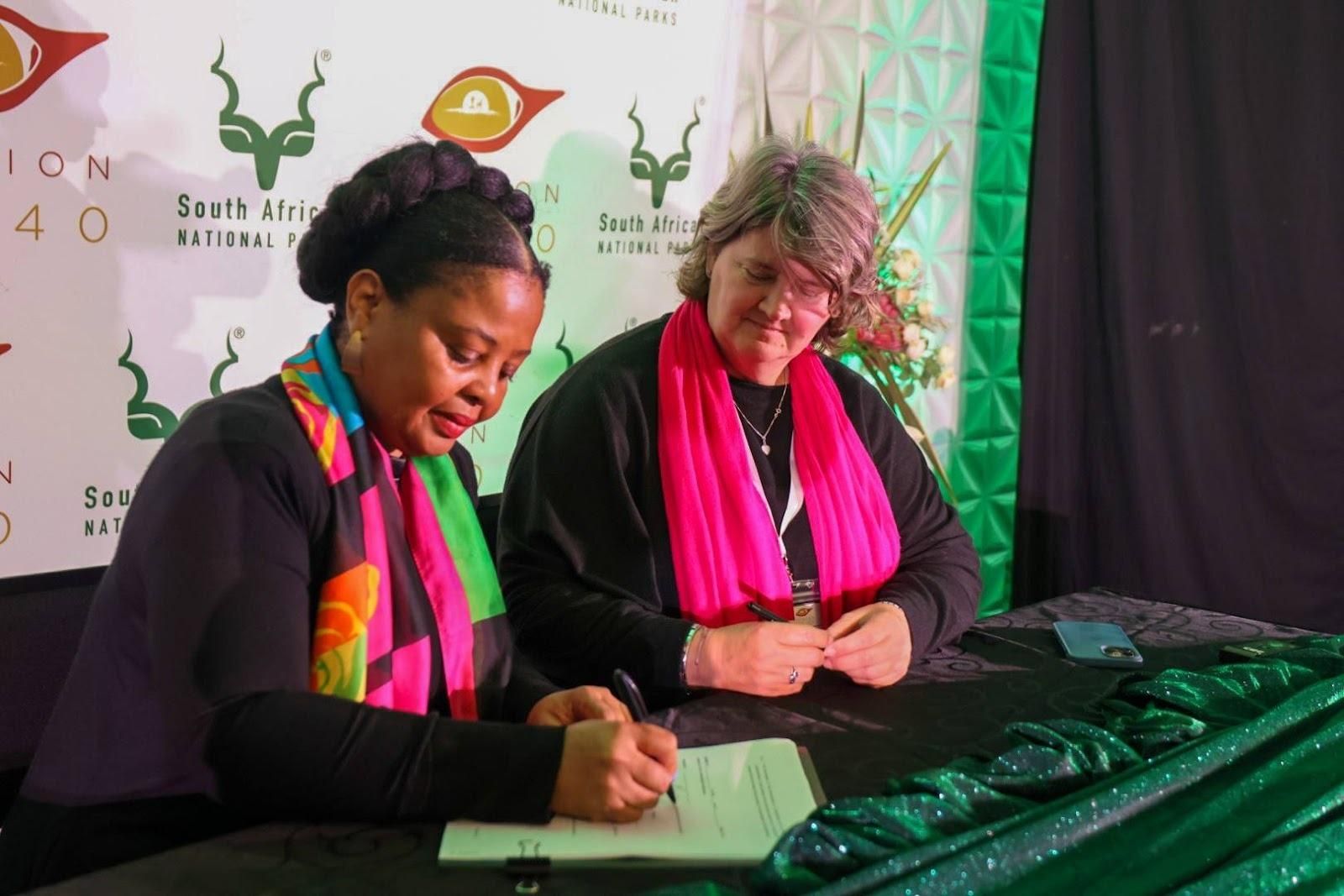
Now, in partnership with SANParks, which manages 21 national parks nationwide, this footprint will expand significantly. The collaboration begins with the Greater Kruger National Park region, where GWF’s Hazyview campus will serve as the gateway hub to the country’s flagship reserve. Plans are underway to establish several more campuses around the Greater Kruger area to meet the high community demand.
The initiative extends far beyond Mpumalanga. Under the new cooperation agreement, GWF campuses will be rolled out across additional “mega living landscapes” identified by SANParks, regions where conservation, community development, and economic growth intersect.
This includes communities neighbouring Addo Elephant National Park in the Eastern Cape, Golden Gate Highlands National Park in the Free State, and the Northern Cape’s Augrabies Falls and Namaqua National Parks. These centres will provide digital literacy, conservation education, and pathways into jobs linked to the conservation economy.
GWF CEO Kate Groch says the partnership was a natural alignment of vision and purpose.
“GWF’s mission is to connect young South Africans with the skills they need to access opportunities for careers in South Africa’s rural spaces,” she explains. “This aligns closely with SANParks’ 2040 vision to create mega living landscapes as part of a people-centred, conservation-driven future anchored by sustainable and climate-resilient national protected areas.”
Groch adds that GWF’s proven education model, now more than a decade in operation, is ready for scaling. “So, we started to talk with SANParks about being their education partner and supporting them in achieving their 2040 vision, while aligning with our own 2030 strategy,” she says.
At the heart of the partnership is a shared goal: to empower local communities, including teachers, as custodians of South Africa’s natural heritage. The model includes creating jobs within the conservation economy and equipping young people with the skills needed to thrive in it.
GWF currently reaches more than 13,500 young people across its operations. The addition of new campuses is expected to generate a “massive multiplier effect.”
Read more on Diamond Fields Advertiser

