






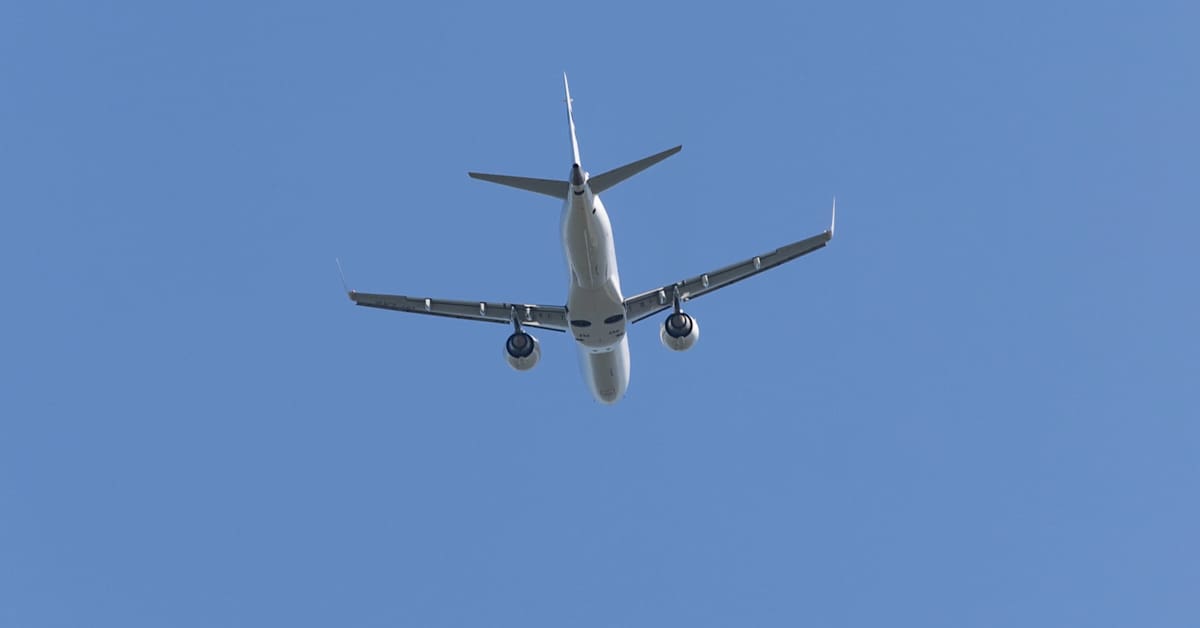
Finnish MPs spent around 400,000 euros of taxpayers’ money on domestic flights in the first half of the year.
Finland’s Baltic Sea coast isn’t the best for surfing, with only about 60 days of rideable waves year-round, according to Surfer Today.
But newspaper Helsingin Sanomat reported on one intrepid Finn who decided to make surfing possible year-round, whatever the weather.
At a secluded pond in Karkkila, southwest Finland, Atso Andersén has built Finland’s most consistent surf break by developing a mobile artificial wave machine — the first of its kind designed to mimic natural surf.
Traditional wave machines are energy-intensive and fixed in place, but Andersén’s system uses submerged wings to generate a rideable wave in almost any body of water.
Through his company Artwave Surf, he has been hosting small groups of visitors — mostly Finns who discovered surfing abroad and want to keep practising back home. Enthusiasts have even travelled from as far away as Japan and Australia.
Andersén wants to keep the location discreet to avoid crowds, protect his celebrity clients’ privacy and guard against industrial espionage.
The Atlantic reported extensively on the global “wave race” in 2018, with companies worldwide competing to build the most convincing artificial surf experience.
Surveillance cameras have already picked up uninvited SUVs “inspecting” the site, Andersén told HS.
The project has not yet turned a profit, and Finnish resorts have shown little interest. But Andersén, who patented the design in 2017, hopes the global surf industry will see its potential.
“When we post video clips online, people immediately ask for the exact location — some even talk about using satellite images to study the setup,” he said.
Finnish MPs spent around 400,000 euros of taxpayers’ money on domestic flights in the first half of the year, according to figures obtained by Iltalehti.
The most expensive single journeys cost over 900 euros each, with the highest fares billed by National Coalition MP Heikki Autto (939 euros) and Swedish People’s Party MP Mikko Ollikainen (934 euros). Flights by Sari Essayah (CD), Tytti Tuppurainen (SDP) and Ville Vähämäki (Finns) each cost 913 euros.
Vähämäki, for example, flew from Helsinki to Oulu and back on the same day in May, with the return ticket amounting to 913.18 euros.
Parliament said Finnair’s dynamic pricing system means costs can rise sharply when flights are nearly full. In total, MPs took 151 domestic flights between January and June that each cost more than 500 euros.
The biggest spender overall was Autto, who lives in Rovaniemi, with domestic flights worth 20,976 euros in six months. He was followed by Åland MP Mats Löfström (16,833 euros) and Finns Party MP Minna Reijonen (13,852 euros).
Parliamentary rules allow MPs to claim domestic flights for travel between their constituency and Helsinki, or when carrying out official duties, if train or bus connections are deemed impractical.
Business daily Kauppalehti profiled Martti Malmi, who in 2009 stumbled upon the newly published Bitcoin blockchain — a discovery that would make him one of the cryptocurrency’s earliest developers.
At his peak, Malmi owned 55,000 bitcoins, now worth more than five billion euros today.
“If I had held onto them, I would be the richest man in Finland,” the 36-year-old told KL.
Instead, he sold much of his stash while studying at what is now Aalto University, even buying a small flat in Espoo with Bitcoin proceeds when the currency was trading at around 30 US dollars.
Malmi, who collaborated directly with Bitcoin’s pseudonymous creator Satoshi Nakamoto, helped build the project’s early website and code. He later ran a trading service and mined bitcoins on his laptop, but says wealth was never his motivation.
“Getting rich was not why I or other early developers worked on bitcoin.”
He still holds some Bitcoin these days and works on Nostr, a decentralised social network.
Malmi described himself to KL as a libertarian, arguing that decentralised technologies can achieve societal change where politics cannot.

