






With the US College Football Classic taking place in Dublin last weekend, hotel rooms soared above €500.
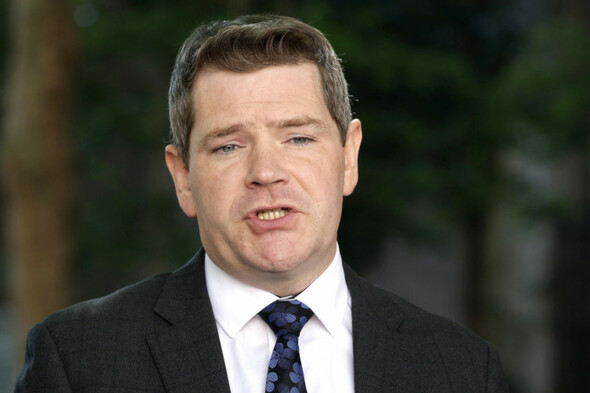
MINISTER FOR TOURISM Peter Burke has criticised hotels in Dublin for inflating their prices when there are large events on in the capital and said it is something he will be addressing in October’s Budget.
Burke said it is an issue that is damaging to Irish tourism and is “absolutely not acceptable”.
He tempered his comments by saying it isn’t something all hotels do, but that it is nonetheless “unacceptable”.
“When you see extortionate prices, be it for a concert or for a specific game, it really sends out a bad message for Irish tourism. So I would absolutely call them out on that,” Burke said.
“Areas like this are very much at the forefront of my mind in decisions that we make with the Minister of Finance and my government colleagues in the coming months,” he added.
Advertisement
Last weekend, the US College Football Classic, which took place in Dublin, was the latest event in the capital to draw attention to the issue.
The week prior, when the Oasis gigs took place in Croke Park, most hotels in Dublin city centre were charging upwards of €400 per night for a standard room – more than double the usual rate.
That weekend, the occupancy rate of 25,000 hotel rooms in Dublin had reached capacity, according to Paul Gallagher, the chief executive of the Irish Hotels Federation.
Minister Burke noted today that a new tourism strategy will be published by his Department next month and said there are a lot of “exciting plans” in place for tourism.
He said that he expects a reduction in VAT for the hospitality sector to be “central” to that.
Asked if a reduction in VAT will be brought in for both restaurants/cafes and hotels, the minister said he did not want to get into Budgetary negotiations, and that that will be a matter for him and the Minister of Finance, Paschal Donohoe, to discuss in due course.
Elsewhere today, Minister Burke launched the Government’s Action Plan on Market Diversification, a government initiative designed to enhance Ireland’s economic resilience and expand global trade opportunities for Irish businesses.
Readers like you are keeping these stories free for everyone… A mix of advertising and supporting contributions helps keep paywalls away from valuable information like this article. Over 5,000 readers like you have already stepped up and support us with a monthly payment or a once-off donation. Learn More Support The Journal

