






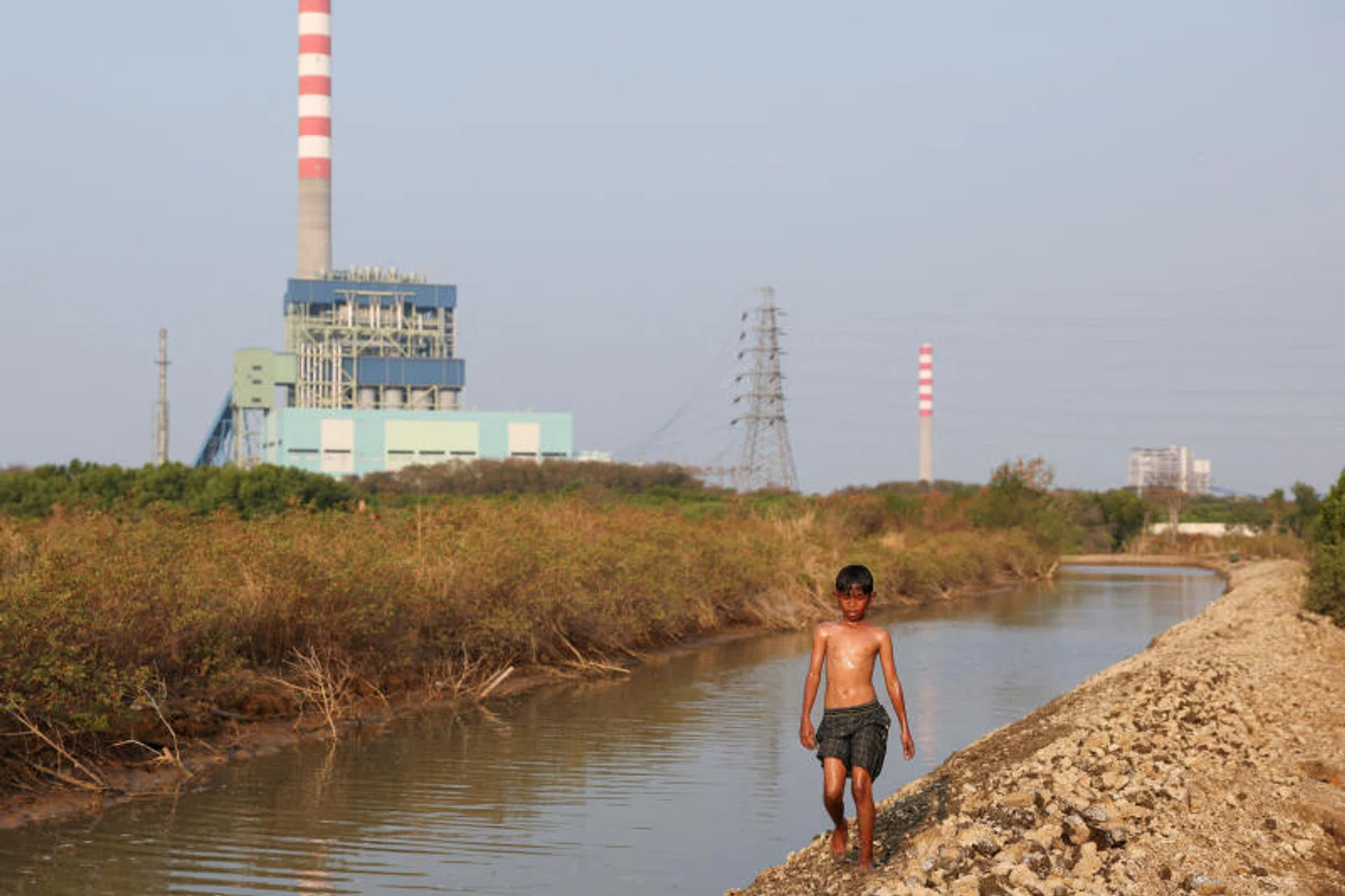
[SINGAPORE] Indonesia’s decision to cancel its first early coal retirement project involving the Cirebon-1 power plant will likely dampen investor confidence in the country’s energy transition, say sustainable finance observers.
“Because the Cirebon deal was structured around private financing, its cancellation could erode private-sector confidence in similar deals involving PLN-owned plants or independent power producer plants selling to PLN,” said Tiza Mafira, director of Climate Policy Initiative’s (CPI) Indonesia chapter.
The country’s state-owned utility company PLN recently announced that it is scrapping plans to bring forward the shutdown of the 660-megawatt Cirebon-1 coal-fired power plant, citing extremely high costs.
PLN has also decided to adopt a coal phase-down approach, which is to naturally retire coal plants when their last power purchase agreement ends, instead of opting to shut them down earlier than their original retirement date.
The decision by PLN comes three years after plant owner and independent power producer (IPP) Cirebon Electric Power, the Indonesian government and Asian Development Bank (ADB) announced an agreement to close the plant earlier than scheduled at the sidelines of COP28, the United Nations’ climate change conference held in Dubai, United Arab Emirates.
The plan was to provide funding to the plant owner as compensation for the projected loss in revenue from closing the plant early through a blend of grants, concessional loans and commercial rate loans. If successful, the plant would cease operations in December 2035 – seven years earlier than the original retirement date of July 2042.
The Cirebon deal was widely seen as the flagship prototype of how early retirement of coal-fired power plants could be structured in South-east Asia.
It is the first agreement under an ADB initiative known as the energy transition mechanism, and also the first coal phase-out project under the Just Energy Transition Partnership (JETP).
The JETP is a US$20 billion climate deal inked in 2022 by Indonesia with a group of developed countries and financial institutions – part of a global alliance called the Glasgow Financial Alliance for Net-Zero (GFanz) – with the aim of supporting the energy transition of South-east Asia’s largest economy.
The country has a target to achieve net-zero carbon emissions by 2060, and plans to retire all coal-fired power plants in the next 15 years.
However, this policy U-turn on Cirebon contradicts Indonesia’s own commitments, said the Institute for Essential Services Reform (IESR).
“If the government does not finalise the retirement plan for Cirebon-1 soon, it risks undermining Indonesia’s credibility and worsening the country’s investment climate, as the hesitation contradicts Indonesia’s own commitments,” said the Indonesia-based think tank in a statement.
The huge costs cited by PLN officials for scrapping the plan has been criticised by some sustainable finance analysts.
IESR’s exercutive director Fabby Tumiwa said that the concerns over high costs focuses solely on contract compensation. However, the government and PLN are ignoring broader economic gains, such as reduced pollution and lower public health costs.
He added that the high costs are also largely a result of their own making, as the government has not corrected policies preventing renewable energy from competing on a level playing field.
The structure of coal power purchase agreements (PPAs) in Indonesia includes take-or-pay clauses. This obligates PLN to buy a minimum quantity of coal-generated electricity, or pay for the shortfall at the contracted price.
PPAs also have a 30-year duration, which is three times longer than the typical investment payback period.
“The domestic market obligation for coal also shifts fuel price risks onto PLN and the state, creating the illusion that coal power is cheap,” said Tumiwa.
CPI’s Mafira noted that financing for the plant shutdown itself has already been committed and is waiting to be mobilised by ADB and several private banks.
“The only thing needed to close the deal was PLN’s willingness to sign a revised power purchase agreement, which had been drafted in a way that does not increase purchasing tariffs for PLN,” she said. “I am not sure what PLN means by huge economical costs, when they are not the ones paying for the retirement.”
Mafira added that PLN needs to state very clearly what aspect of the deal is incurring high costs.
“For example, if PLN is referring to the cost of increasing grid stability, ADB had also provided a policy-based loan which can be used for such infrastructure upgrades. If that was not ideal, it would be helpful to know why,” she said.
IESR said that the plan to close the plant earlier had undergone technical and economic feasibility studies, along with several agreements between PLN and Cirebon Electric Power.
“ADB had also prepared financing support for the early retirement, but the Indonesian government still considers the funding insufficient,” it added.
The inconsistent government policies are also reflected in how Indonesia’s presidential regulation still embodies the country’s potential to retire coal plants earlier, contrary to what PLN has said about adopting a coal phase-down approach.
“So the statement denying phase-out is more of a political statement at this point rather than a hard policy,” said Mafira. “That being said, political willingness goes a long way. Indonesia’s needs to prove its seriousness by already retiring currently old coal plants.”
Furthermore, focusing on the natural retirement of older coal plants may not be able to attract sufficient investors.
“A key feature of early retirement financing structures is that investors are attracted to refinancing newer coal plants, not old ones that are about to naturally retire,” she added. “They can recoup whatever revenue is due over the plant’s lifespan, while cutting it shorter than the original lifespan.”
ADB will continue to engage with Indonesia and other stakeholders on a range of clean-energy initiatives, stretching from coal retirement and renewable energy development to electricity grid expansion and modernisation, said a spokesperson in response to queries from The Business Times.
The multilateral development bank approved a US$470 million loan to PLN last month, to help develop solar and wind projects, strengthen grid infrastructure, and improve the state utility’s capacity to manage the energy transition.
“Phasing out fossil fuels continues to be a priority for ADB,” the spokesperson added. “Cutting emissions and improving air quality by moving away from legacy fossil-based power and heat generation can significantly improve the lives of people in Asia and the Pacific. This can also help to unlock new investments in clean, reliable, and sustainable energy.”
A spokesperson from GFanz said the global banking alliance remains committed to the JETP, and to supporting financial institutions that recognise the opportunity to invest in the drivers of economic growth in Indonesia. DBS, which had been serving as the financial adviser to sovereign wealth fund Indonesia Investment Authority on the Cirebon transaction, declined to comment.
Kavitha Menon, executive director of the Singapore Sustainable Finance Association, said PLN’s decision highlights the scale and complexity of phasing out coal in South-east Asia.
She added that systems to support energy transition – be it physical infrastructure of clean-energy generation, transmission and distribution, or financing mechanisms – are still developing.
In addition, a significant proportion of coal plants in Asia are relatively young, complicating the early retirement of these plants, given the financial impact of not being able to honour existing long-dated power purchase agreements.
“Financing instruments, such as high-integrity transition credits, can serve as a complementary financing mechanism to enable early retirement of these coal-fired power plants,” she added.
Read more on The Business Times

