






Indonesia was aligned with the U.S. a few decades ago, but a combination of domestic stability and Chinese investments has persuaded Southeast Asia’s biggest economy toward Beijing, leaving America behind.
SURABAYA, Indonesia (CN) — From sparkly electric vehicles to cushy keychain dolls for kids, more Chinese products are finding way to Indonesian urbanity.
It’s an entry that illustrates a Chinese comeback in Indonesia, which has gone through a rollercoaster relationship with Beijing since its independence in 1945.
Washington must stare with unease, if not worry. Indonesia is Southeast Asia’s biggest economy, with the fourth-biggest population in the world at around 287 million people.
Its archipelago stretches wide enough for three time zones, and its geographical placement holds multiple choke points in ship routes connecting China with Africa and Europe.
Who controls the South China Sea is a key factor. Washington wishes for routes to stay open for international waters. Beijing wants them under its territorial claim, sparking tension with Southeast Asian neighbors.
Indonesia is following a trend in Southeast Asia. While China’s influence grows in the region, the U.S. is losing what it had.
From 1995 to 2004, Indonesia, the Philippines and Singapore were aligned with the U.S., while other nations were deemed nonaligned, but leaning toward American influence, according to a study called “The Anatomy of Choice Alignment Index,” published in late October by the Lee Kuan Yew School of Public Policy in Singapore.
From 2015 to 2024, that picture has almost turned upside down. In the latest numbers, the Philippines is the only Southeast Asian nation aligned with the U.S., while China has a total of four, with the majority of nonaligned countries swaying toward the Asian superpower.
Researchers examined the rivalry between the U.S. and China based on each superpower’s influence on every Southeast Asian country, excluding Timor-Leste, using various metrics, including diplomacy, economics, soft power, and security.
“If you want to compete with China, presence matters,” said Muhammad Habib, a researcher at the Indonesian think tank The Centre for Strategic and International Studies, in a video interview with Courthouse News.
“China guarantees or ensures itself being represented across Association of Southeast Asian Nations meetings, even at the ASEAN Summits,” he said.
U.S. President Donald Trump did exactly that at the latest ASEAN summit in October to promote a “peace deal” between Cambodia and Thailand amid their ongoing border dispute. But the U.S. president also left the summit prematurely to meet Chinese leader Xi Jinping in South Korea.
“Basically, the trend continues from Joe Biden to Donald Trump about the U.S. presence in the region,” Habib said. “The question remains whether this performative will translate into a much more substantial engagement.”
To sway Indonesia, you must invest in its developing infrastructure. Indonesia and its 10 ASEAN counterparts stand at the core of China’s Belt and Road Initiative, Habib explained.
The same can’t be said about Washington’s Indo-Pacific strategy, where neighboring nations such as Japan or Australia play main roles.
Under the decadelong leadership of former President Joko Widodo, Indonesia built Southeast Asia’s only high-speed train and accelerated its green transition with Chinese investments.
Current President Prabowo Subianto has continued course since taking office last year. China has invested over $4 billion into Nusantara, Indonesia’s new national capital project aimed for completion within 20 years.
Local suppliers also work with Chinese clients, explains Handoko Lim, who manages his family business selling glass and aluminum in downtown Surabaya, Indonesia’s second-largest city.
“We have Chinese customers who ask for our help in joint ventures with Indonesian companies. We can’t communicate directly with them, but they often meet us with an Indonesian translator,” Lim said.
He even once welcomed a man from Zimbabwe who entered his shop to ask for future collaboration. The same cannot be said about European or American citizens, who have never set foot on his floors.
“Because Europe and the U.S. have a different profile,” he said. “Europeans will send you a blueprint of something they want produced, but I can’t sell finished goods like that. I can only distribute.”
A heritage preserved
Lim himself belongs to an ethnic group in Indonesia labeled Chinese Indonesians. Over 11 million Indonesians are estimated to have Chinese ancestry, making the group the biggest Chinese community outside of China.
Earning a reputation for having a knack for business, this group has historically played a vital role in the Indonesian economy, scholars say, building trading bridges between the archipelago and specializing in other foreign ventures.
But the group’s existence was previously coined “the Chinese problem” by Suharto, who ruled Indonesia for 31 years as a pro-Western and U.S.-supported dictator.
He snatched the presidential seat after a nationwide communist purge in 1965, which targeted Chinese Indonesians falsely accused of working for Beijing through the Indonesian Communist Party, then the third-biggest communist movement globally with 3 million members.
Diplomatic ties with China were abolished under Suharto’s reign. Chinese Indonesians underwent an assimilation process that encouraged them to scrap their Chinese names for Indonesian ones and prohibited them from expressing Chinese culture in public, such as scripts, traditions and the Chinese Lunar New Year.
Suharto successfully mixed domestic identity politics with Jakarta’s stance against Beijing. Washington continued to funnel money into Indonesia and maintained U.S. influence during this time.
A common myth outlining that the Chinese Indonesian minority controlled more than 70% of Indonesia’s economy — largely debunked by economists — fueled nationwide protests in 1998 that ended Suharto’s regime following the Asian financial crisis one year prior.
Chinese Indonesian businesses were raided and burned during the protests. More than 1,000 people died in the riots, and 168 cases of rape were reported.
Just two months ago, nationwide protests against government policies emerged again. Observers worried that a repeat of Chinese Indonesian scapegoating would occur.
It did not.
“I do personally think that the public, especially the youth, perception toward Chinese Indonesians has changed into more of a positive perspective now. The youth now are more aware of diversity in every aspect of society, including ethnicity,” said Jessenia Destarini, a spokesperson from KontraS, an Indonesian human rights organization monitoring the aftermath of the 1998 riots.
The changing domestic perception of Chinese Indonesians may pave the way for a smoother line to Beijing moving forward.
Widodo was hesitant to let Indonesia join BRICS, an intergovernmental organization consisting of countries from the Global South. Indonesia could jeopardize its nonalignment policy, the former president worried.
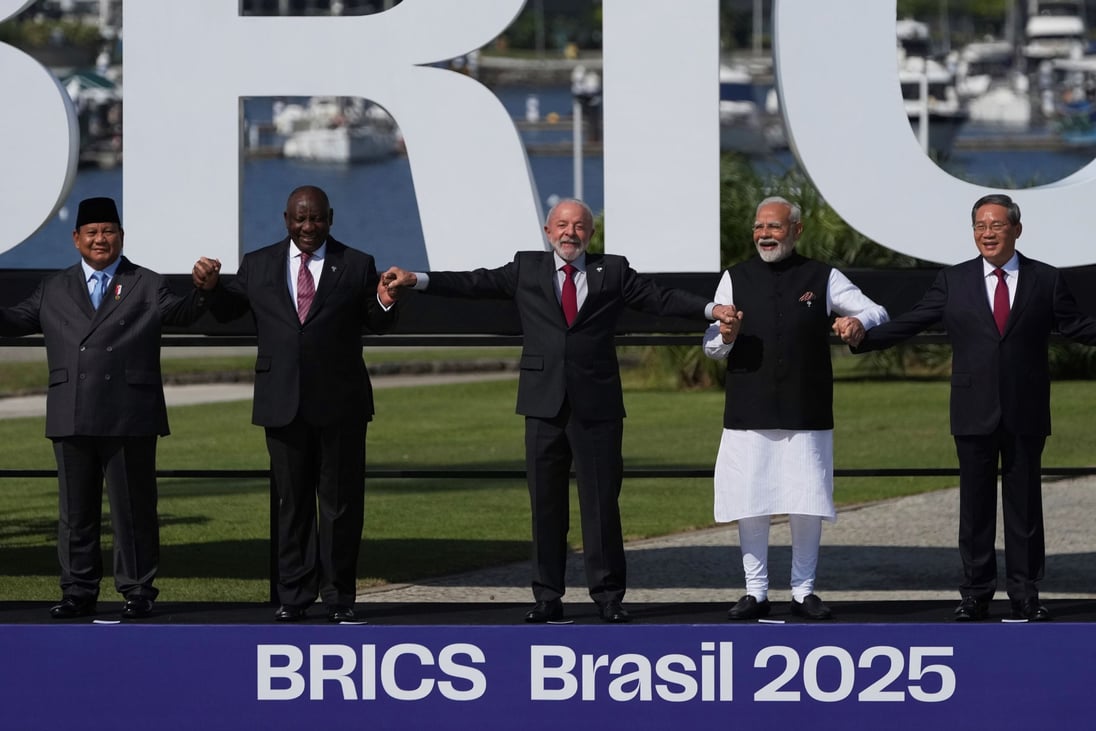
In contrast, Prabowo jumped straight ahead earlier this year, making Indonesia the first formal Southeast Asian member of BRICS, with critics fearing that Jakarta will favor China and Russia moving forward.
Meanwhile, Prabowo agreed to a 19% tariff on Indonesian goods entering the American market amid Trump’s global tariff war. In the same breath, he called it a “wake-up call” for Indonesia to explore new export markets.
Read more on Court House News Service

