






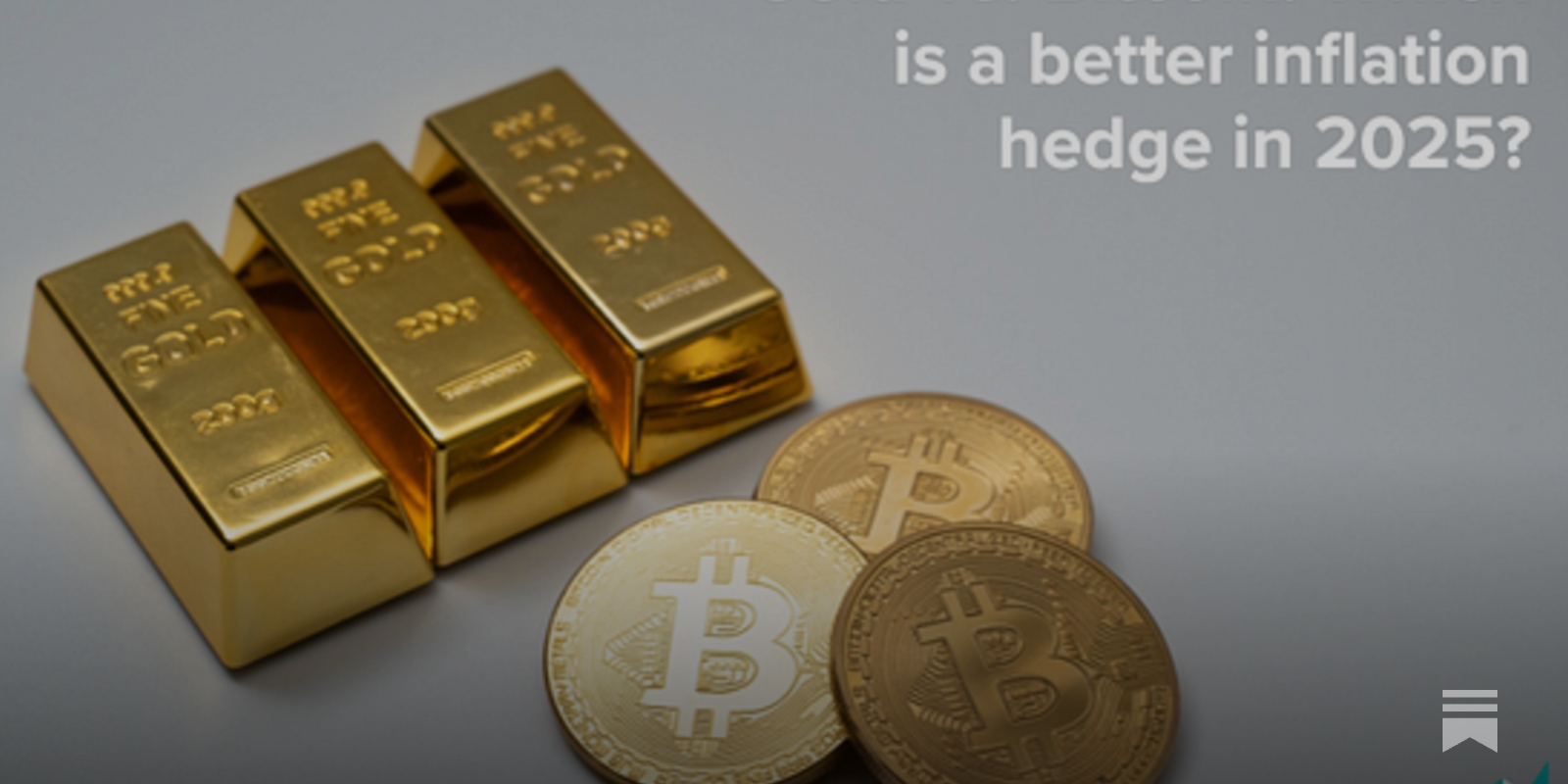
In today’s unpredictable market climate, with global inflation still a worry and central banks printing money, investors everywhere are searching for reliable tools to preserve their wealth. Two assets command the spotlight: gold, the age-old symbol of value, and bitcoin, the digital challenger making headlines and fortunes. But with the world changing fast, which one truly stands up as the better inflation hedge in 2025? This guide breaks down history, mechanics, pros and cons, and expert arguments so you can decide where your hard-earned money can best resist inflation’s bite.
🔔 Don’t miss out!
Add [email protected] to your email list so our updates never land in spam
Inflation erodes your purchasing power. When prices rise, your savings buy less — unless those savings are tucked into assets that keep their value or, even better, grow faster than inflation. An inflation hedge is just that: an investment that protects or increases your wealth when currencies lose value.
Traditionally, gold has been the go-to for this task. But bitcoin, with its fixed supply and digital nature, promises a new kind of scarcity. As investors wrestle with the strengths and shakiness of both, understanding how each works is essential.
History:
Gold’s reputation as “hard money” spans thousands of years. Ancient civilizations, banks, nations, and modern investors alike have trusted gold to store wealth across recessions, wars, and political swings.
Despite momentary volatility, gold remains a global favorite. In early 2025, gold climbed over 8% for the year, and in some accounts, as much as 30% due to renewed demand from both institutions and central banks.
Launched in 2009, bitcoin introduced the idea of a digital, decentralized currency with a mathematically capped supply — only 21 million coins will ever exist. New bitcoins are produced at a known declining rate (“halving” events), making its inflation rate even lower than gold’s long-term average.
Bitcoin surged to a record high in May 2025, passing $110,000, and finished up over 35% year-to-date, outperforming gold in some stretches. Still, bitcoin’s year has seen its share of wild swings, dropping double digits in short spans.
Gold’s safe-haven status is reinforced over centuries, and it’s typically uncorrelated (sometimes negatively) with stock markets. Bitcoin is growing in this role but still tends to tumble along with stocks during sharp market retreats.
Gold as crisis insurance:
Studies and market history consistently show gold performing well when markets crash or inflation spikes, like in 2008, 2020, and even during the 2022 bear market. Its negative correlation with equities makes it a genuine “parachute” for traditional portfolios.
Bitcoin as digital disruptor:
Proponents argue that bitcoin’s supply math, decentralization, and resistance to government tampering position it for the digital age. Some evidence, especially in unstable economies, shows bitcoin use surging when fiat money fails. For instance, bitcoin trading volumes exploded by 1,000% in inflation-hit Argentina.
Mixed performance:
Bitcoin sometimes outpaces inflation spectacularly (like in 2021), but has also plunged alongside risk assets when financial stress hits. Gold, by contrast, often holds or gains modestly during shocks.
2025 snapshot:
Many modern wealth managers and institutions suggest the answer may not be “either/or,” but rather a blend:
As a rule of thumb: Gold for sleep-at-night stability, Bitcoin for calculated risk and potential outperformance.
A diversified inflation-hedge basket might look like:
Final thought: In today’s inflation-prone world, both gold and bitcoin offer compelling but different armor. Tradition and trust vs. innovation and disruption. Savvy investors need not choose just one. Instead, understand their strengths, prepare for their weaknesses, and build a balanced portfolio that can weather tomorrow’s storms.
Read more on winvestacrisps.in

