






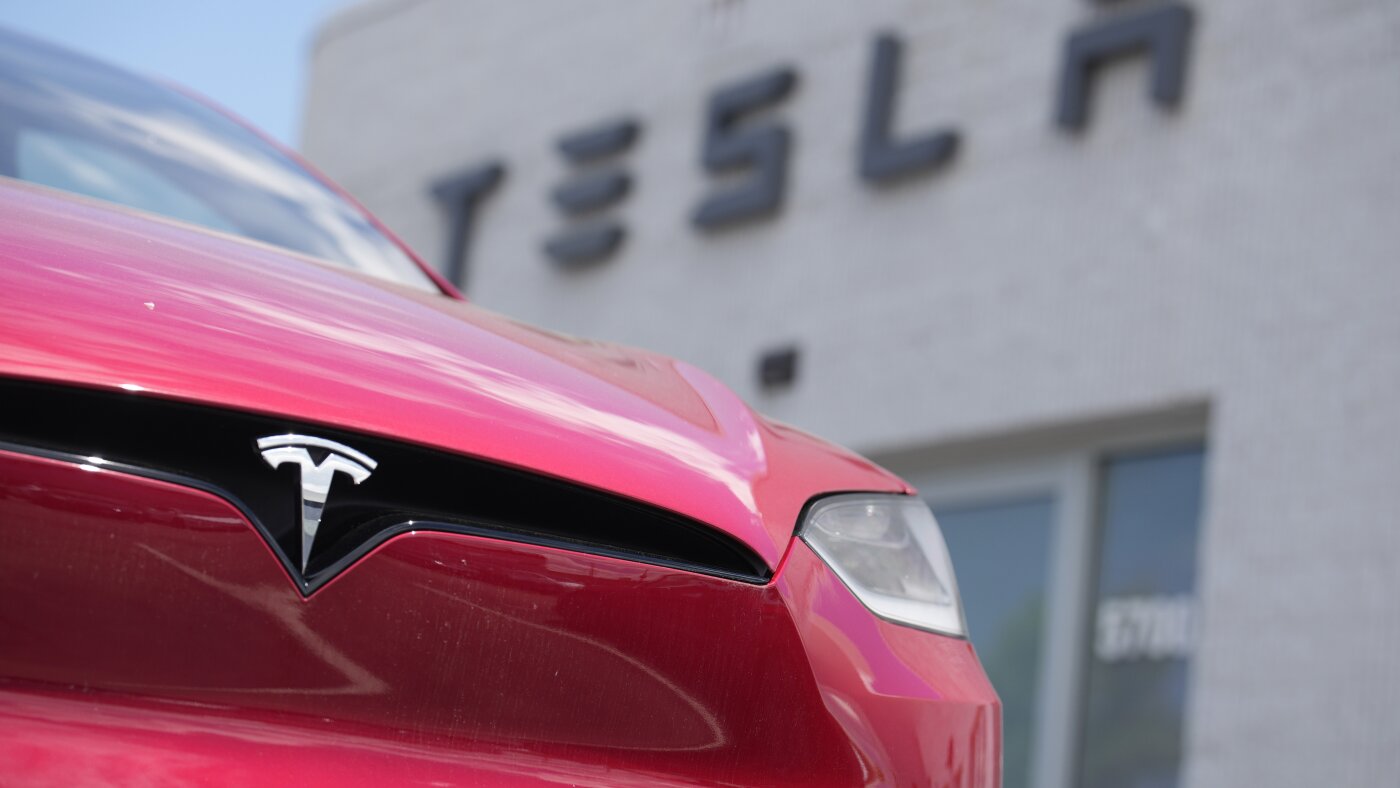
Tesla’s profit dropped 46% year over year,the company revealed in its earnings update Wednesday evening.
That was not exactly a surprise – in fact, it was better than most analysts had expected. Tesla had already reported sales for the quarter, which showed the continuation of a slump that stretched through much of the year. More revenue from other parts of the company, like a growing energy storage business, haven’t made up for the fact that Tesla’s not selling as many cars as it used to.
Tesla, once the undisputed global leader in electric vehicle sales, has lost that crown as its brand reputation has soured and competition – particularly from China – has grown more intense.
But the company continues to maintain that it’s in the process of transitioning from being a car company to a “physical AI company,” with value based on its self-driving vehicle technology, its robotaxi service and, eventually, humanoid robots.
As part of that pivot, Tesla is discontinuing its higher-end Model S and Model X vehicles. The vehicles were already made in much smaller numbers than the more affordable Models 3 and Y, but had symbolic value. The a return to rapid expansion with the launch of a “next-generation” vehicle that was tentatively planned for 2025.
That second growth wave hasn’t materialized. Tesla repeatedly teased a much cheaper Tesla,rumored to sell for about $25,000 thanks to revolutionary changes in manufacturing. Even after Reuters reported that the vehicle was dead, Musk publicly maintained it was coming.
But it wasn’t. Musk eventually confirmed that the company would focus its major redesign efforts on the Cybercab. Instead of offering a significantly cheaper vehicle, the company rolled out slightly cheaper versions of the Model 3 and Model Y.
Sales of electric vehicles in the U.S. are underperforming expectations, and then President Trump took office and his administration began to systematically roll back EV incentives and regulations. Sales of EVs rose sharply in the summer of 2025 as consumers tried to take advantage of a disappearing consumer tax credit, and then dropped when the tax credit expired at the end of September. Automakers say it’s still not clear what demand for EVs will look like without those tax credits.
Trump’s policy changes have affected Tesla even more directly, by taking away a key revenue stream. Under previous government policies, automakers who didn’t meet requirements for making their vehicles cleaner could buy “credits” from competitors who overperformed on building EVs, in lieu of paying fines. This was a lucrative source of cash for Tesla, and one that is now dwindling away. Tesla typically does not respond to requests for comment, and did not reply to an inquiry for this story.
Globally, meanwhile, EVs are still ascendant. In December, in the european Union, buyers registered more new pure EVs than traditional gasoline vehicles for the first time ever. Hybrids (like the original Prius) remain more popular than either, but that market isn’t growing as fast as EVs. In Europe, EV sales increased by more than 50% year-over-year, while those popular hybrids rose only 6%. Traditional gasoline- and diesel-powered car sales dropped by around 20%.

